Soap in Chinese is 肥皂 (féi zào), pronounced roughly “fay dzao”. For a bar of soap, 肥皂 is the word every shopkeeper expects. One catch: if you mean the pump bottle by the sink, ask for 洗手液 (xǐ shǒu yè), liquid hand soap, instead. Learn both, because many public restrooms in China do not stock soap at all, and knowing how to ask for it (or buy it) turns a grimy travel day into a non-event.
Below you get the character breakdown, the related soap words locals actually use, six ready phrases for stores and restrooms, and the practical hygiene habits that keep you clean anywhere in China. Say them out loud as you read, and they will be ready when your hands are not.
Table of Contents
- Key Takeaways
- The Word for Soap in Chinese: 肥皂
- Breaking Down 肥皂 (féi zào)
- Related Soap Words: 香皂, 洗手液, 沐浴露, 洗衣皂
- 硫磺皂: China’s Classic Sulfur Soap
- 6 Useful Phrases With 肥皂
- At the Store
- At the Sink and Restroom
- Soap in China’s Public Restrooms
- Where to Buy Soap in China
- Practice Saying It Out Loud
- Frequently Asked Questions
- How do you say soap in Chinese?
- What is the difference between 肥皂 and 香皂?
- How do you say liquid hand soap in Chinese?
- Where can I buy soap in China?
- What measure word do you use with soap in Chinese?
- Do public restrooms in China have soap?
Key Takeaways
- Soap in Chinese is 肥皂 (féi zào); for the pump bottle at a sink, use 洗手液 (xǐ shǒu yè).
- 香皂 (xiāng zào) is scented bar soap, 沐浴露 (mù yù lù) is shower gel, and 洗衣皂 (xǐ yī zào) is laundry soap.
- Ask 有洗手液吗? (Yǒu xǐ shǒu yè ma?) to check whether a restroom has hand soap before you need it.
- Public restrooms in China often lack soap, so carry a small bottle of hand soap or sanitizer, just as you carry tissues.
The Word for Soap in Chinese: 肥皂
The standard word for soap in Chinese is 肥皂 (féi zào). It covers bar soap in everyday speech, and it is the word printed on classic soap packaging across China. You can see the full entry, with stroke order and example sentences, in the Taiwan Ministry of Education dictionary entry for 肥皂.
Breaking Down 肥皂 (féi zào)
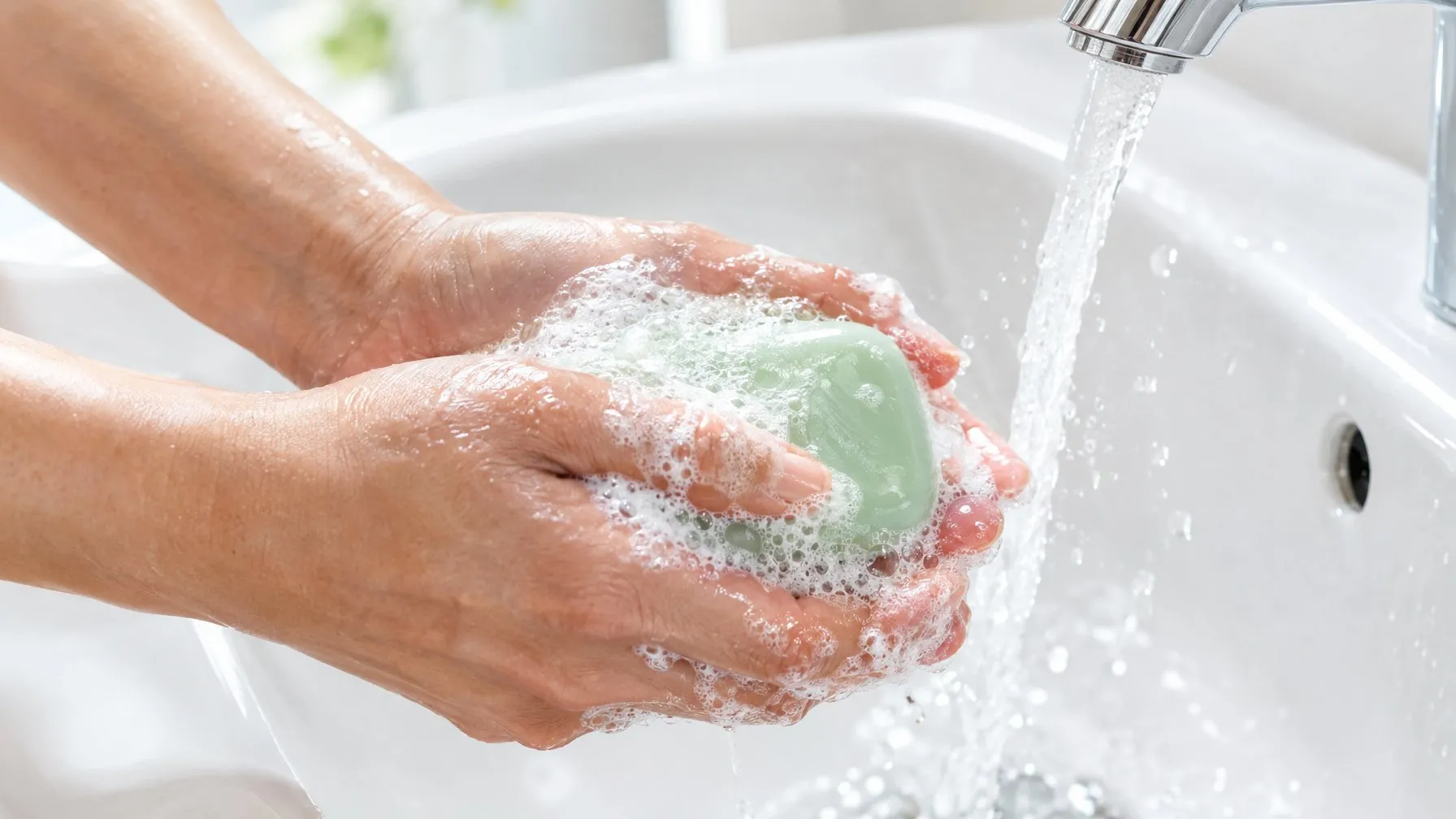
肥 (féi) means fat or fatty, and 皂 (zào) refers to soap and originally to the dark pods of the honey locust tree that Chinese families once used for washing. The word is older than modern soap itself: when northern refugees arrived in Hangzhou centuries ago, they found locals washing with fat southern pods and nicknamed them feizao, “fatty locust pods”. The name stuck, and today it simply means soap.
The tones are second then fourth: féi rises, zào falls. Say the pair slowly a few times, then let it speed up naturally. If your tones slip in a store, context saves you, because you are almost always pointing at a shelf of soap when you say it.
Related Soap Words: 香皂, 洗手液, 沐浴露, 洗衣皂
Chinese splits “soap” by product type, and using the right one gets you to the right shelf faster. 香皂 (xiāng zào), literally “fragrant soap”, is the nicer scented bar for hands and face. 洗手液 (xǐ shǒu yè), “wash hand liquid”, is pump bottle hand soap, the word to know for restrooms.
For the shower you want 沐浴露 (mù yù lù), shower gel or body wash, which pairs naturally with the word for shower (洗澡). For clothes there is 洗衣皂 (xǐ yī zào), the tough laundry soap bar that Chinese households still keep by the sink for hand washing, right next to the laundry (洗衣服) routine itself.

硫磺皂: China’s Classic Sulfur Soap
One bar you will spot everywhere in China is 硫磺皂 (liú huáng zào), sulfur soap. The yellow bar in the plain red wrapper, most famously from Shanghai, has been a household staple for generations and is still the budget go to for oily skin and backpacker laundry alike.
It smells exactly like you would expect, so many locals keep it for clothes and use a scented 香皂 for hands. If a friend offers you a yellow bar and a pink bar, you now know why.
6 Useful Phrases With 肥皂
These six phrases cover buying soap, asking for it, and talking about it at the sink. Read them out loud twice, and they will be there when your hands are wet.
At the Store
我要买肥皂。 (Wǒ yào mǎi féi zào.) “I want to buy soap.” Direct, polite enough, and understood everywhere.
请问,肥皂在哪里? (Qǐng wèn, féi zào zài nǎ lǐ?) “Excuse me, where is the soap?” Swap in 洗手液 or 沐浴露 depending on what you are hunting for.
一块肥皂多少钱? (Yī kuài féi zào duō shǎo qián?) “How much is a bar of soap?” 块 (kuài) is the measure word for bars and chunks.
At the Sink and Restroom
有洗手液吗? (Yǒu xǐ shǒu yè ma?) “Is there hand soap?” Ask restaurant staff before you sit down, or a friend outside the restroom.
洗手液用完了。 (Xǐ shǒu yè yòng wán le.) “The hand soap is used up.” The phrase your roommate or Airbnb host actually needs to hear.
用肥皂洗手。 (Yòng féi zào xǐ shǒu.) “Wash your hands with soap.” A sentence every parent in China says daily, and a useful one to recognize on restroom posters.
Soap in China’s Public Restrooms
Here is the honest picture. Many public restrooms in China, especially older neighborhood facilities, parks, and small restaurants, do not provide soap at the sink. Newer malls, airports, and chain restaurants usually do, sometimes with sensor faucets and foam dispensers, but the baseline assumption should be: bring your own.
Travelers across Asia hear the same advice. Culture Trip’s bathroom guide for the region reminds travelers that many public bathrooms may not have soap at all and recommends carrying hand sanitizer everywhere. In China the local habit solves it differently: people carry pocket tissue packs, and increasingly a small clip-on bottle of hand soap or sanitizer, exactly the habit from our toilet paper in Chinese (卫生纸) guide.
Build the same kit: a pack of 纸巾, a small bottle of 洗手液 or sanitizer, and you are covered for any restroom in the country. After washing, dry your hands on your own towel (浴巾) corner or air dry, because paper at the sink is just as rare.
Where to Buy Soap in China
You can buy soap almost everywhere. Every supermarket (超市) has a personal care aisle with bars, pump bottles, and body wash, usually beside the shampoo (洗发水) and toothpaste (牙膏). Convenience stores stock travel-size hand soap, and a pharmacy (药店) will carry sulfur soap and medicated bars.
Chinese personal care brands are worth a look while you shop. Time Out Shanghai’s roundup of Chinese beauty brands introduces names like Pechoin and Herborist, homegrown labels whose soaps and cleansers sit on the same shelves as the international brands.
Picture yourself on day one: you walk into a supermarket, ask 肥皂在哪里?, and check out with a bar of 香皂 and a pump bottle of 洗手液. Bathroom sorted, no translation app required.
Practice Saying It Out Loud
Vocabulary sticks when your mouth has said it, not just when your eyes have read it. Run the six phrases above out loud, then drill the rising and falling tones of féi zào ten times. Record yourself once and compare with the video at the top of this post.
The fastest way to make new words stick is to say them out loud to a real person, so practice these soap phrases with an italki community tutor before your next supermarket run. Sessions are informal conversation practice, pay per lesson, starting from just a few dollars, and a tutor can role play the exact scenes from this post: the store aisle, the restroom question, the empty soap dispenser.
Give it one week of short practice and you will handle every hygiene errand in China in full sentences, from buying soap to asking for it at a restaurant sink.
Frequently Asked Questions
How do you say soap in Chinese?
Soap in Chinese is 肥皂 (féi zào). It is the standard everyday word for bar soap, understood everywhere in mainland China, Taiwan, and beyond. For liquid hand soap in a pump bottle, the word is 洗手液 (xǐ shǒu yè).
What is the difference between 肥皂 and 香皂?
肥皂 is the general word for soap, especially plain or laundry bars. 香皂 (xiāng zào), literally “fragrant soap”, is the nicer scented bar for hands and face. In stores they sit side by side, so knowing both helps you grab the right one.
How do you say liquid hand soap in Chinese?
Liquid hand soap is 洗手液 (xǐ shǒu yè), literally “wash hand liquid”. This is the word for pump bottles at sinks, and the most useful soap word for public restrooms: ask 有洗手液吗? to check whether a restroom has any.
Where can I buy soap in China?
Supermarkets, convenience stores, and pharmacies all stock soap. Supermarkets have the full aisle, convenience stores carry travel sizes, and pharmacies sell medicated bars like sulfur soap. Ask any staff member 肥皂在哪里? and you will be pointed to the right shelf.
What measure word do you use with soap in Chinese?
Use 块 (kuài) for bars: 一块肥皂 is one bar of soap. Use 瓶 (píng) for bottles: 一瓶洗手液 is one bottle of hand soap. You will hear both constantly in stores.
Do public restrooms in China have soap?
Often they do not, especially in older buildings, parks, and small restaurants. Newer malls, airports, and international chains usually do. The safe habit is the local one: carry a small bottle of hand soap or sanitizer in your bag every day, next to your pack of tissues.