How to say passion fruit in Chinese? The word is 百香果 (bǎi xiāng guǒ), which literally means “hundred-fragrance fruit.”
Passion fruit is a delicious tropical treat enjoyed worldwide. If you’re learning Chinese or planning a trip to China, knowing how to say passion fruit in Chinese, Mandarin can be helpful. I try to also eat some in the summer time, when I can order on Taobao. In the winter, I stick with strawberries.
I’m DK, and I’ve been living in Tianjin, China for over 12 years. I hold HSK5 certification in Mandarin and a degree in Intercultural Studies. I’ve navigated countless fruit markets across China, from the bustling stalls of Tianjin’s local markets to the tropical abundance of Hainan island. Here’s what I’ve learned about passion fruit in Chinese.
The first time I bought passion fruit at a coastal market in Beihai, the vendor laughed when I pointed at the wrinkled purple fruit and said “zhè shì shénme” (这是什么, what is this). She handed me one, cut it open with a small knife, and showed me how to scoop the pulp. “Bǎi xiāng guǒ,” she said slowly, watching my face for recognition. I repeated it three times before she nodded approvingly. That memory stuck with me: the tangy sweetness, the vendor’s patience, and the realization that learning fruit names in Chinese opens doors to genuine human connection.
This unique name reflects the fruit’s intense aroma and flavor.
Learning to say “passion fruit” in Chinese is a great way to expand your vocabulary and impress native speakers. It’s also useful when shopping at Chinese markets or ordering food in restaurants. After a long day exploring, nothing beats coming home to a shower and a glass of fresh passion fruit juice.
The Chinese characters for passion fruit (百香果) are visually descriptive. The first character means “hundred,” the second means “fragrant,” and the third means “fruit.” This combination paints a vivid picture of the fruit’s aromatic nature. If you’re looking for a good deal on imported fruits, keep an eye out for discounts at larger supermarkets during seasonal sales.
Table of Contents

Key Takeaways
- Passion fruit in Chinese is pronounced “bǎi xiāng guǒ” and written as 百香果
- The name translates to “hundred-fragrance fruit,” describing its strong aroma
- Learning fruit names in Chinese can enhance language skills and cultural understanding
Passion Fruit in the Chinese Language
Passion fruit has several names in Chinese, reflecting its unique characteristics and cultural significance. The fruit’s translation varies in different regions of China, and it plays a role in both culinary traditions and language learning.
Translating Passion Fruit to Mandarin
In Mandarin Chinese, passion fruit is commonly called 百香果 (bǎi xiāng guǒ). This name translates to “hundred-fragrance fruit” in English. The Chinese characters break down as follows:
- 百 (bǎi): hundred
- 香 (xiāng): fragrant
- 果 (guǒ): fruit
Another name for passion fruit in Chinese is 西番莲 (xī fān lián), which means “western pomegranate.” This name reflects the fruit’s foreign origin and appearance.
Cultural Significance of Passion Fruit in China
Passion fruit has gained popularity in China in recent years. It is often used in:
- Desserts and drinks
- Traditional Chinese medicine
- Modern cuisine fusion dishes
The fruit’s tartness and unique flavor make it a favorite among young people.
Passion fruit-flavored products have become trendy in urban areas.
Chinese social media often features passion fruit in food videos and health-related content. Its perceived health benefits have contributed to its rising popularity.
Common Citrus Fruits in China
While passion fruit is not a citrus fruit, it’s often associated with other tropical and exotic fruits in China. Some common citrus fruits in Chinese cuisine include:
- 橙子 (chéng zi): Orange
- 柠檬 (níng méng): Lemon
- 柚子 (yòu zi): Pomelo
These fruits play important roles in Chinese cooking and traditional festivals.
Oranges, for example, are often given as gifts during Chinese New Year for good luck.
Citrus fruits are valued for their vitamin C content and refreshing flavors. They are used in both sweet and savory dishes in Chinese cuisine.
Comparative Analysis of Fruits in Chinese
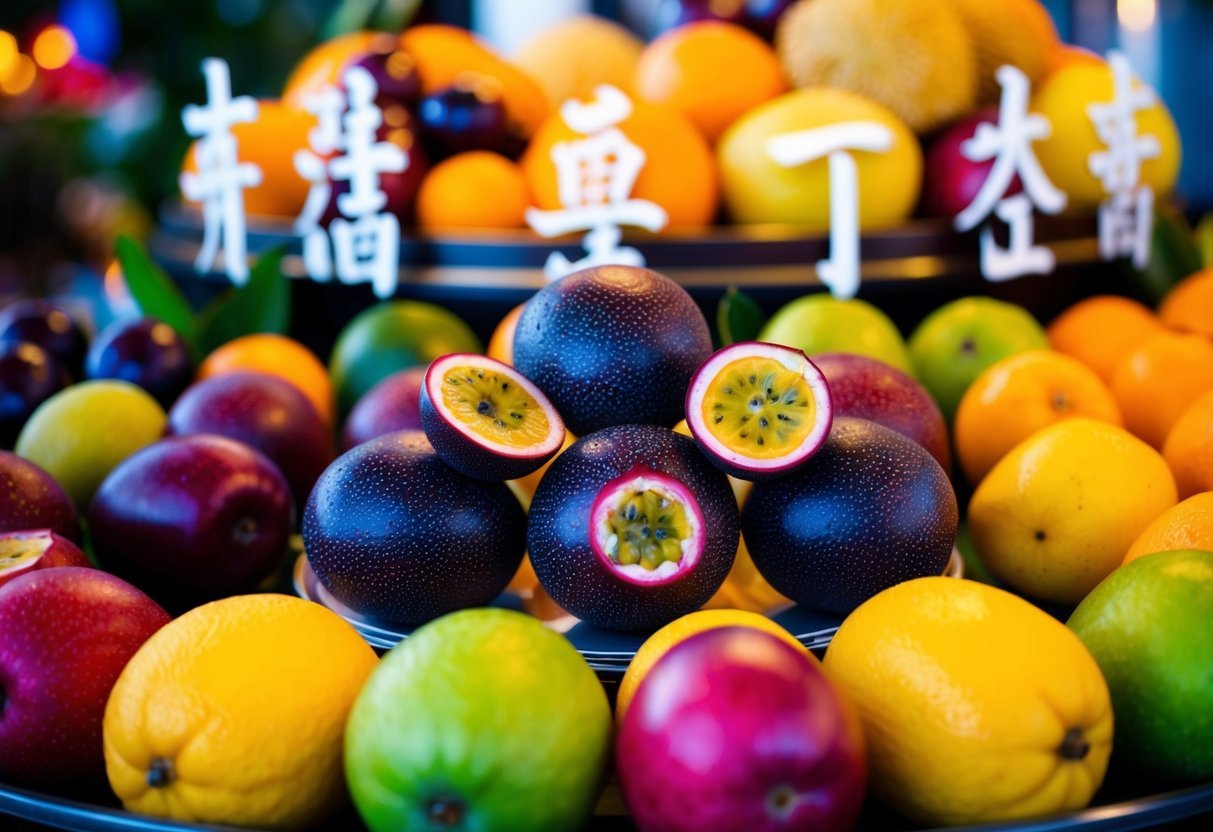
Chinese language has unique names for many fruits. These names often reflect cultural significance and linguistic patterns.
Let’s explore how different fruits are referred to in Mandarin Chinese.
Tropical Fruits in Mandarin
Passion fruit is called 百香果 (bǎi xiāng guǒ) in Mandarin. This name means “hundred-fragrance fruit,” highlighting its strong aroma.
Other tropical fruits have interesting Chinese names:
- Lychee: 荔枝 (lì zhī)
- Mango: 芒果 (máng guǒ)
- Dragon fruit: 火龙果 (huǒ lóng guǒ)
- Avocado: 牛油果 (niú yóu guǒ)
These names often describe the fruit’s appearance or taste.
For example, dragon fruit’s name translates to “fire dragon fruit,” referring to its bright red skin.
Comparison with Other Fruits
Common fruits have simpler names in Chinese:
- Apple: 苹果 (píng guǒ)
- Banana: 香蕉 (xiāng jiāo)
- Orange: 橙子 (chéng zi)
- Grape: 葡萄 (pú tao)
These names are used frequently in daily life, including strawberry and blueberry!
The word for fruit in general is 水果 (shuǐ guǒ), which literally means “water fruit.”
Some fruits share similar characters in their names. For instance, both passion fruit (百香果) and kiwi (奇异果) use the character 果 (guǒ), meaning “fruit.”
Agricultural Importance of Fruit
Fruit production is a significant part of Chinese agriculture. While rice and soybeans are staple crops, fruit cultivation adds variety to the agricultural landscape.
Kiwi fruit, also known as Chinese gooseberry (猕猴桃), is an important export.
Its Chinese name means “monkey peach,” referring to monkeys’ love for this fruit.
Citrus fruits like oranges and tangerines are widely grown in southern China. And some of the best passion fruit I’ve ever eaten was in Hong Kong and Vietnam.
These fruits play a role in traditional celebrations, symbolizing good fortune and prosperity.
If you want a real teacher to check your tones on words like these, book a discounted trial lesson on italki and put today’s fruit vocabulary to work.

Frequently Asked Questions
Passion fruit has various names in Chinese languages and dialects. Learning these terms can help you communicate about this tropical fruit in different Chinese-speaking regions.
How to say passion fruit in Chinese?
What is the Chinese term for Passiflora edulis?
How can I articulate the word for passion fruit in Mandarin?
Is there a specific name for passion fruit in the Cantonese dialect?
What is passion fruit referred to as in various Chinese dialects?
How do you translate exotic fruits like granadilla and passion fruit into Chinese?
What English expression corresponds to ‘bai xiang guo’?
This tropical fruit is known for its tart flavor and edible seeds.
You might also like:
Advanced ways for how to say passion fruit in Chinese sentences
Chinese: 百香果是一种热带水果,味道酸甜。
Pinyin: Bǎi xiāng guǒ shì yī zhǒng rè dài shuǐ guǒ, wèi dào suān tián。
English: Passion fruit is a tropical fruit with a sweet and sour taste.
Chinese: 我喜欢在夏天喝冰凉的百香果汁。
Pinyin: Wǒ xǐ huan zài xià tiān hē bīng liáng de bǎi xiāng guǒ zhī。
English: I like to drink chilled passion fruit juice in the summer.
Chinese: 百香果可以用来制作许多甜点和饮品。
Pinyin: Bǎi xiāng guǒ kě yǐ yòng lái zhì zuò xǔ duō tián diǎn hé yǐn pǐn。
English: Passion fruit can be used to make many desserts and beverages.
Chinese: 百香果富含维生素C,对身体有益。
Pinyin: Bǎi xiāng guǒ fáng yù wéi shēng sù C, duì shēn tǐ yǒu yì。
English: Passion fruit is rich in vitamin C and is beneficial to the body.
Chinese: 这种百香果的品种特别香,适合做果酱。
Pinyin: Zhè zhǒng bǎi xiāng guǒ de pǐn zhǒng tè bié xiāng, shì hé zuò guǒ jiàng。
English: This variety of passion fruit is particularly fragrant and suitable for making jam.