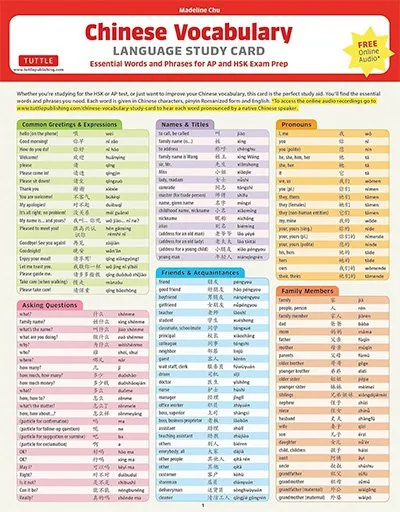
Charger in Chinese is 充电器 (chōng diàn qì), literally a “fill-with-electricity device.” To borrow one, say 我可以借一下充电器吗? (wǒ kě yǐ jiè yí xià chōng diàn qì ma?), “Can I borrow a charger?” And when your battery is dying, the sentence that opens every door is 我的手机没电了 (wǒ de shǒu jī méi diàn le), “My phone is out of battery.”
In China this vocabulary matters more than almost anywhere else: no battery means no mobile payment, no metro code, no map. The good news is that chargers, cables, and shared power banks are everywhere, once you know what to call them.
Table of Contents
Key Takeaways
- Charger in Chinese is 充电器 (chōng diàn qì): 充 (fill) + 电 (electricity) + 器 (device).
- Charging cable is 充电线 (chōng diàn xiàn), plug is 插头 (chā tóu), outlet is 插座 (chā zuò).
- Borrow one with 我可以借一下充电器吗? and announce the problem with 我的手机没电了 (my phone is dead).
- 共享充电宝 (shared power banks) sit in malls, restaurants, and metro stations; scan the QR code, pay with WeChat or Alipay, return to any station of the same brand.
- China runs on 220V with type A, C, and I sockets; modern phone chargers handle it, but check the label before plugging in.
The core word: 充电器
充电器 is the standard word for any charger: phone, laptop, camera. It is on HSK vocabulary lists, and the MDBG dictionary entry for 充电器 gives the literal gloss “battery charger” with audio if you want to hear the three syllables slowly.
Character breakdown: 充, 电, 器
充 (chōng) means to fill or recharge, the same 充 as in 充值 (chōng zhí), topping up your phone credit or transit card. 电 (diàn) is electricity, the character inside 电话 (telephone), 电脑 (computer), and 电池 (diàn chí), battery, which our guide to how to say battery in Chinese covers in detail. 器 (qì) is the “device” suffix, the same ending as 机器 (machine). Fill plus electricity plus device: a charger.
Related words: cable, plug, outlet
The charger is only half the story. The cable is 充电线 (chōng diàn xiàn), literally “charging wire,” and you will also hear 数据线 (shù jù xiàn), data cable. The plug is 插头 (chā tóu), and the wall outlet is 插座 (chā zuò). The verb is simply 充电 (chōng diàn), to charge: 我在充电 (wǒ zài chōng diàn), I am charging. FluentU’s list of technical terms in Chinese groups 充电器, 数据线, and 电池 together, which is exactly how they appear in real life.
Key phrases for charging in Chinese
Two situations cover almost everything: borrowing a charger from a person, and renting power from a machine.
Borrowing a charger politely
Start with the problem: 我的手机没电了 (wǒ de shǒu jī méi diàn le), my phone is dead. The 手机 here is the everyday word for a cell phone, and our guide to how to say cell phone in Chinese builds out the rest of that family. Then ask: 我可以借一下充电器吗? (wǒ kě yǐ jiè yí xià chōng diàn qì ma?), can I borrow a charger? If they have a cable but no brick, follow with 有充电线吗? (yǒu chōng diàn xiàn ma?), do you have a charging cable? Staff at cafes, restaurants, and hotel front desks hear this daily and will often just hand you one.
When you hand it back, 还给你 (huán gěi nǐ), here you go, plus 太感谢了 (tài gǎn xiè le), thanks so much, completes the exchange. Borrowing a charger in Chinese is one polite sentence, but those two closers are what make people happy to lend again.
Shared power banks: 共享充电宝
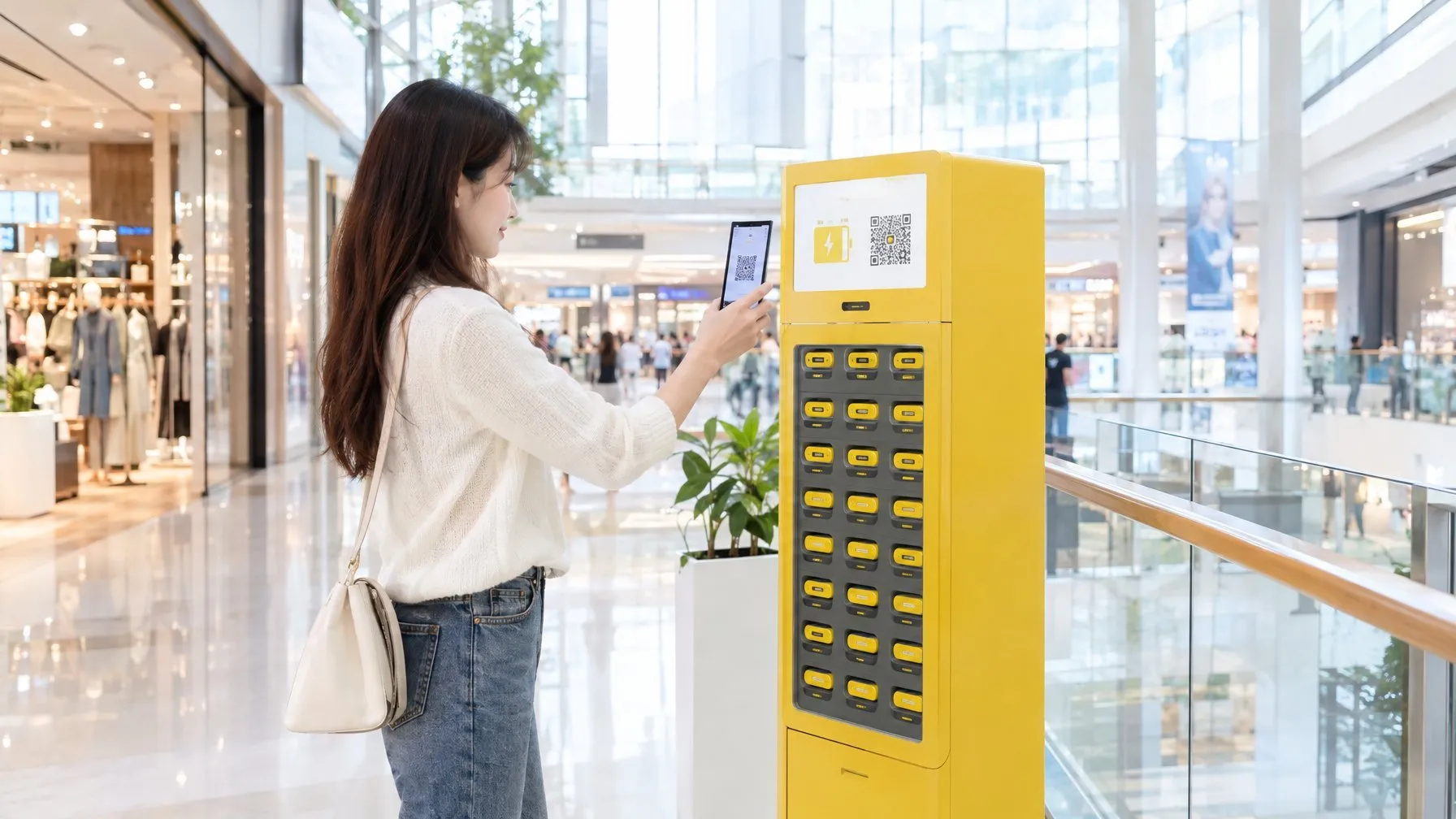
China’s backup plan is the 共享充电宝 (gòng xiǎng chōng diàn bǎo), the shared power bank: yellow or green rental cabinets in malls, restaurants, metro stations, and even small shops. The 充电宝 itself is the portable battery, and our guide to how to say power bank in Chinese breaks that word down.
Renting one is pure China: you scan the cabinet’s QR code (二维码, covered in how to say QR code in Chinese) with WeChat or Alipay, pay a small deposit, and a charged battery pops out. China Highlights’ guide to mobile payment in China walks through setting up the two apps, which is the only real prerequisite. Return the battery to any station of the same brand, even in a different city.
Where to find a charge in China
For expats the stakes are real: a dead phone in China means no payment app, no metro code, and no ride home, so charger in Chinese is survival vocabulary, not trivia. If borrowing fails, buying is easy: convenience stores (便利店) sell cables and basic chargers, electronics markets sell everything, and mall kiosks rent power by the hour. While you wait for your phone to come back to life, cafes are the classic charging territory, and they usually have 无线网络 too; our guides to how to say wifi in Chinese and how to say password in Chinese cover the two questions you will ask next.
Buying a charger: 快充 and 原装
Two label words decide what you pay. 快充 (kuài chōng) is fast charging, and 原装 (yuán zhuāng) means original equipment, the official brand version rather than the cheap copy. At a counter, the questions are 有快充吗? (yǒu kuài chōng ma?), do you have a fast charger, and 这个多少钱? (zhè ge duō shǎo qián?), how much is this. A basic cable runs 10 to 20 kuai at a convenience store; branded 快充 bricks cost more at electronics counters.

Plugs and voltage in China
Mainland China runs on 220V at 50Hz, and you will meet three socket shapes: type A (two flat pins), type C (two round pins), and type I (three angled pins, like Australia). Modern phone and laptop chargers are almost always dual voltage (check the label for 100-240V), so they work fine with a simple plug adapter. What travelers actually buy is the adapter (转换插头, zhuǎn huàn chā tóu), not a converter. Many metro stations, airports, and hotels also have free USB ports or public 充电桩 (chōng diàn zhuāng, charging posts) near seating areas, so a cable in your day bag is worth more than an adapter in your suitcase.
Practice your charging script
Run a one-minute drill before your next outing: say 充电器 three times, then 我的手机没电了, then the full request 我可以借一下充电器吗? Out loud, until the tones stop feeling like a tongue twister. Try these phrases in a real conversation this week: book an hour with a tutor on italki and role-play the whole dead-phone scenario, because an hour of practice often costs less than dinner out.
Picture your next low-battery moment: instead of hovering at 2 percent in silence, you look up, say 我的手机没电了, and five minutes later your phone is drinking from a shared 充电宝 while you sip coffee. That is the difference between knowing one word and being stranded without a map, a wallet, or a ride home.
Frequently Asked Questions
How do you say charger in Chinese?
Charger in Chinese is 充电器 (chōng diàn qì): 充 (to fill or recharge), 电 (electricity), and 器 (device). It covers phone, laptop, and camera chargers alike, and it is the word on the box in every electronics store in China.
How do you say charging cable in Chinese?
Charging cable in Chinese is 充电线 (chōng diàn xiàn), literally “charging wire.” You will also hear 数据线 (shù jù xiàn), data cable, for the same object. If you need a specific connector, name the phone: iPhone 充电线 or Type-C 线 will get you the right one.
How do you say my phone is dead in Chinese?
My phone is dead in Chinese is 我的手机没电了 (wǒ de shǒu jī méi diàn le), literally “my phone has no electricity anymore.” A shorter version, 手机没电了, works fine on its own and is the standard way to explain why you need a charger, a cable, or a shared power bank.
How do you rent a shared power bank in China?
Find a 共享充电宝 cabinet in a mall, restaurant, or metro station, scan its QR code with WeChat or Alipay, pay the deposit (usually around 99 yuan, waived for users with a high payment credit score), and take the battery that pops out. Return it to any station of the same brand when you are done; billing stops on return, and the deposit is refunded through the mini program.
What kind of plug does China use?
Mainland China uses type A (two flat pins), type C (two round pins), and type I (three angled pins) sockets at 220V and 50Hz. Most modern chargers are dual voltage (100-240V), so you only need a plug adapter (转换插头), which convenience stores and electronics markets sell everywhere.
How do you say fast charging in Chinese?
Fast charging in Chinese is 快充 (kuài chōng), literally “fast charge.” When shopping, ask 有快充吗? (yǒu kuài chōng ma?), do you have a fast charger, and 支持快充吗? (zhī chí kuài chōng ma?), does it support fast charging. The opposite end of the shelf is 原装 (yuán zhuāng), original brand equipment, which costs more but charges safest.