
Knowing how to say bronze in Chinese really opens up a whole new layer of understanding. You may not think it’s a big deal, but bronze is one of China’s most important metals, woven into art, history, and even casual chats about awards.
The most common way to say bronze in Chinese is “青铜” (qīng tóng). That’s the word for the metal itself, while “古铜色” (gǔ tóng sè) describes the bronze color.
Table of Contents
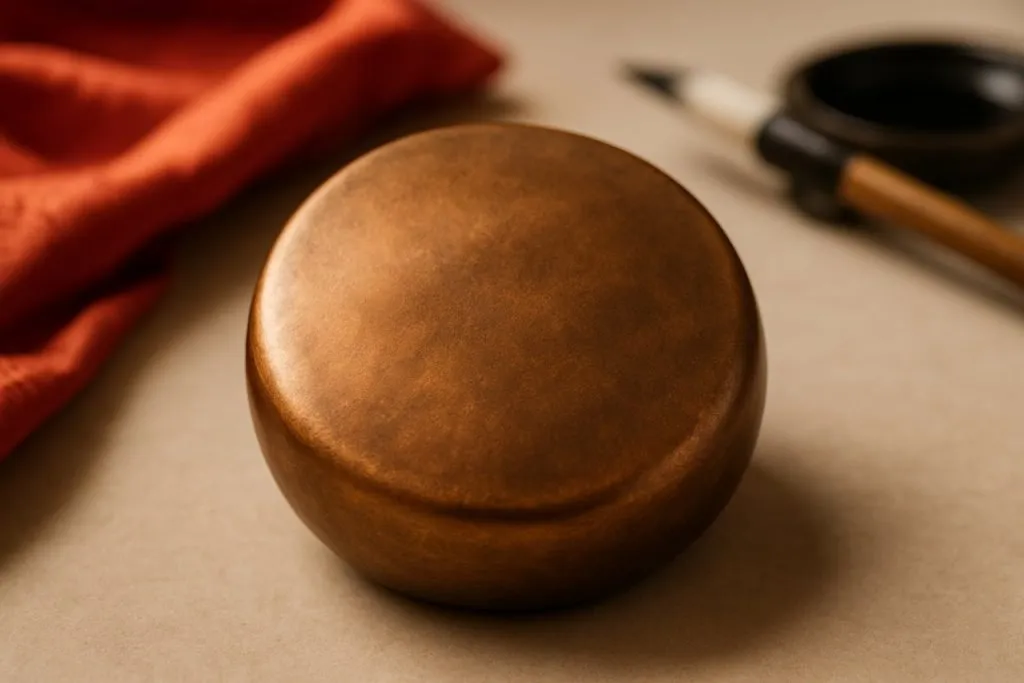
According to the Cambridge English-Chinese dictionary, these terms cover both the material and its unique look. Other translations exist depending on the situation.
Knowing these words helps you talk about bronze objects, colors, or even achievements. Chinese has a few ways to express bronze ideas, and each fits a particular context.
Key Takeaways
- The main Chinese word for bronze metal is “青铜” (qīng tóng)
- Bronze color is “古铜色” (gǔ tóng sè)
- Different terms show if you mean the metal, the color, or a specific object
Key Translations and Pronunciations for Bronze in Chinese
Chinese uses several characters for bronze, but 青铜 is the go-to for the metal alloy. Characters like 铜 and 青 each have their place when you’re talking about bronze-related topics.
Chinese Words for Bronze (青铜, 铜, 青銅)
The main word for bronze is 青铜 (qīng tóng), literally “green copper.” In Traditional Chinese dictionaries, you’ll see 青銅, which uses the traditional script.
铜 (tóng) means copper, the metal itself. When you add 青, you get the full word for bronze.
In Traditional Chinese, it’s 銅 for copper and 青銅 for bronze. Mainland China sticks with the simpler 铜 and 青铜.
青 (qīng) brings in the “green” or “blue–green” vibe, hinting at the classic bronze patina. It’s a little poetic, honestly.
For statues and artwork, you’ll see 青铜塑像 (qīng tóng sù xiàng). Other translations include 古铜色 (gǔ tóng se) for the color and 铜像 (tóng xiàng) for bronze statues.
How to Pronounce Bronze (Pinyin and Tones)
青铜 uses two second tones: qīng tóng. Both syllables rise in pitch, kind of like you’re asking a question.
The first character 青 (qīng) starts low and rises. Keep your tongue flat and let your voice go up.
铜 (tóng) does the same thing with the second tone. The “t” is soft, almost like the “t” in “stop.”
Pronunciation videos show 青铜色 (qīng tóng sè) adds a fourth tone “sè” for color, so it’s rising-rising-falling.
People sometimes mix up the tones and use the first instead of the second. That rising sound is important, don’t skip it.
Try saying “CHING-tong” and let both syllables go up in pitch. Native speakers focus on the tone movement, not just the volume.
Bronze vs. Copper: Word Differences in Chinese
铜 (tóng) is pure copper. 青铜 (qīng tóng) is the copper-tin mix that makes bronze.
You’ll see copper in words like 铜矿 (tóng kuàng) for copper ore and 铜板 (tóng bǎn) for copper plate. These never use 青.
Bronze contains tin (锡, xī) mixed in. The 青 character points to this blend, not just plain copper.
For ancient bronze, it’s 古铜 (gǔ tóng) “ancient” plus copper. That’s how you tell old artifacts from regular copper stuff.
Dictionaries show bronze medals as 铜牌 (tóng pái), using the copper character. Context is everything here, sometimes 铜 means bronze, sometimes just copper.
For color, copper is 铜色 (tóng sè), and bronze is 青铜色 (qīng tóng sè) or 古铜色 (gǔ tóng sè). It’s all about subtlety.
Common Uses and Symbolism of Bronze in Chinese Contexts
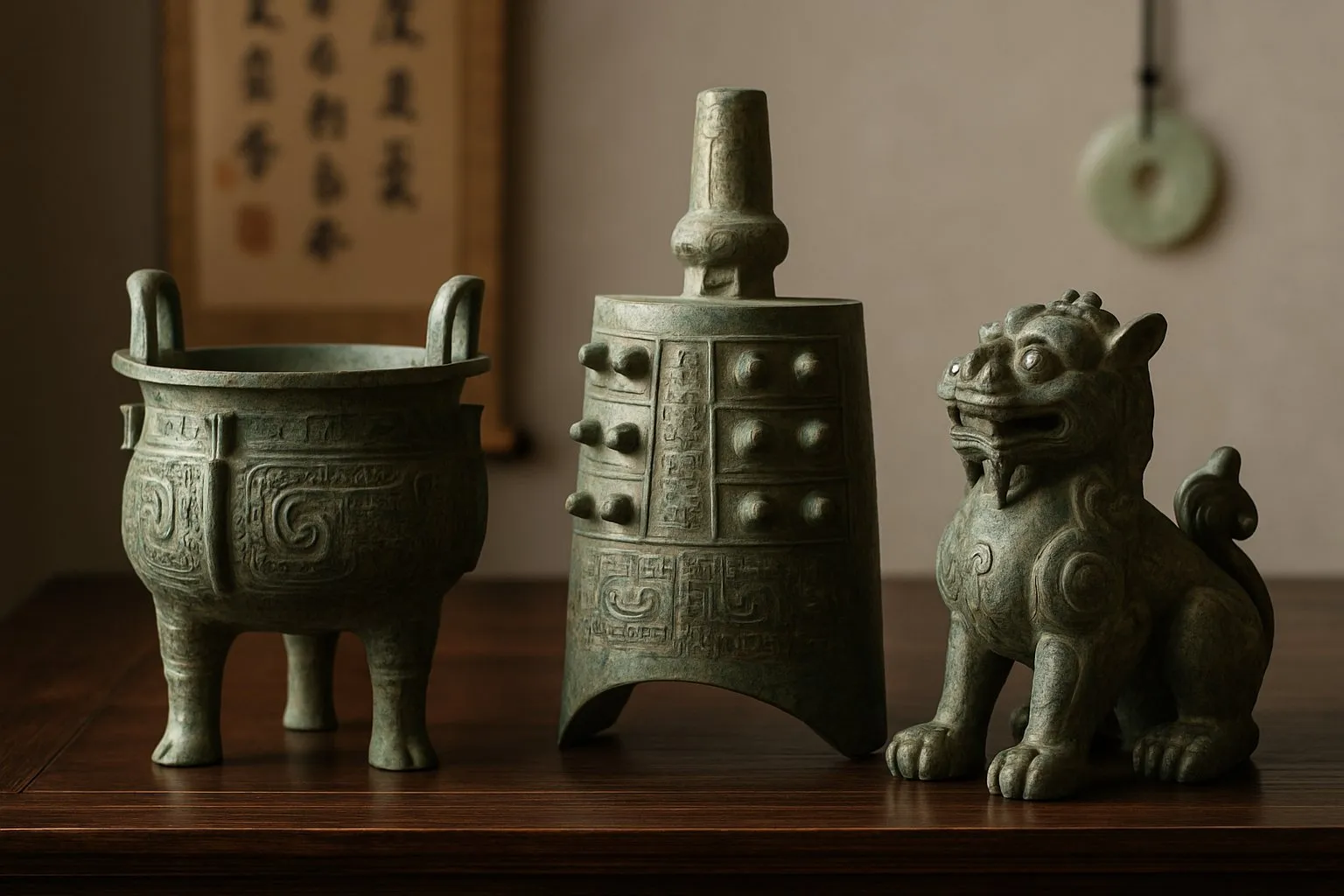
Bronze means a lot in Chinese society. From ancient ceremonial objects to sports awards, this metal stands for achievement, strength, and history.
Bronze Medals and Awards (铜牌, 季军)
Bronze medals (铜牌) are a big deal in Chinese sports. Athletes get these for third place, whether it’s the Olympics or just a school baseball event.
季军 is the word for the bronze medalist or third-place finisher. It combines 季 (fourth season) and 军 (army/champion), which is kind of cool if you think about it.
Where you’ll see bronze awards:
- Olympic Games and big international events
- National sports championships
- Academic contests
- Corporate recognition stuff
In China, bronze medals are respectable, not just a “nice try” prize. Bronze lasts, and that’s the point, it’s about sticking with it and getting recognized.
Bronze Statues and Artifacts (铜像, 青铜器)
Bronze statues (铜像) pop up everywhere in modern China. They honor leaders, historical figures, and cultural icons in parks and plazas.
Ancient bronze artifacts are treasures. Chinese bronzes have been cast for about 3,700 years, with early pieces mostly used for ancestor worship.
Main types of bronze artifacts:
- 青铜器 (ancient bronze vessels): Used in ceremonies for food and wine
- Bronze mirrors: Everyday items with fancy designs
- Bronze plaques: Markers and memorials
- Wine holders: Ritual vessels for ceremonies
Museums across China keep these on display as national treasures. They show off the skill and creativity of ancient craftsmen.
Bronze Color and Its Cultural Significance
The bronze color (古铜色) isn’t just pretty, it’s loaded with meaning. You see it in traditional art and modern decor all the time.
This warm, metallic color suggests age, wisdom, and a sense of depth. Designers love bronze tones for creating that classy, old-school vibe in homes and offices.
What bronze color stands for:
- Durability: It resists corrosion
- Tradition: Ties to ancient Chinese heritage
- Elegance: It just looks refined
- Stability: Feels solid and reliable
Bronze ware (铜器) still shapes Chinese design today. Furniture, lighting, bridges and decorations often use bronze finishes to bring in a sense of tradition and style.
Historical and Artistic Importance of Bronze in China

Bronze has been part of Chinese life for over 3,700 years. It marked the shift from the Neolithic era and kicked off some of the world’s most impressive metalworking achievements.
Bronze Age and Ancient Chinese Bronze (青铜时代, 青铜器时代)
Chinese bronzes showed up before 1500 BCE, starting China’s Bronze Age. This era ran from about 1500 to 300 BCE and changed everything.
The Bronze Age began when people figured out how to mix copper and tin for a stronger metal. That shift started around 2,000 B.C. in northern China and led to huge social changes.
Most bronze objects from this time were ritual vessels for ancestor worship. These (青铜器) often had inscriptions for ancestors or important events.
The Shang Dynasty (c.1600-1046 BC) and Zhou Dynasty (1045-256 BC) were the golden age of bronze vessels. Craftsmen made intricate designs with mythical creatures and sharp geometric patterns.
Famous Artifacts and Sites: Sanxingdui and More
The Sanxingdui (三星堆) archaeological site in Sichuan Province uncovered some of China’s most spectacular bronze artifacts. These finds really shook up what folks thought about ancient Chinese bronze working skills.
Sanxingdui bronze masks and figures show off artistic styles that look nothing like other Chinese bronze traditions. The site had massive bronze trees, human figures, and ceremonial masks with wild, distinctive features.
Bronze drums (铜鼓) make up another big category of Chinese bronze artifacts. People used these instruments for both music and ceremonies all over southern China and Southeast Asia.
The famous taotie design pops up on lots of sacrificial bronze vessels from 3,000 years ago. This “beast of gluttony” pattern mashes together animal traits into one fierce creature, loaded with religious and ritual meaning.
Bronze Casting and Metalworking Techniques
Ancient Chinese bronze casting (铸铜) demanded foundries that could get seriously hot. Craftsmen had to heat copper and tin ores until they mixed and melted just right.
The piece-mold casting technique took over as the main method in ancient China. Artisans built clay molds in sections, then poured molten bronze into the assembled mold.
Chinese bronze-workers came up with clever ways to create complex decorative patterns. They’d carve intricate designs straight into the molds before pouring in the hot copper alloy.
Bronze foundries popped up in northern China where copper and tin were easy to get. These spots grew into hubs of tech innovation and artistic creativity.
Bronze casting took serious skill and precision. Masters handed down their craft through the generations, and each region developed its own style and traditions that shaped Chinese metalworking for ages.
Notable Expressions and Idioms Relating to Bronze
Chinese culture is packed with expressions and idioms using bronze-related words. These sayings often come from old stories, opera characters, and ancient bronze artifacts that meant a lot in society.
Famous Sayings: The Story of the Broken Mirror
The most famous bronze-related idiom? That’s 乐昌破镜 (lè chāng pò jìng), or “the broken mirror of Princess Lechang.” The story goes that a princess broke a bronze mirror in half during wartime.
She kept one piece and handed the other to her husband before they got separated. Years later, the matching pieces helped them find each other again.
The bronze mirror became a symbol of true love that survives distance. People still use this phrase to talk about couples who reunite after being apart.
The bronze mirror stands for an unbreakable bond. It’s wild how much emotion and symbolism these old bronze objects carried in Chinese culture.
Bronze in Chinese Opera and Traditional Culture
Traditional Chinese opera throws around bronze-related terms for certain characters. 铜锤花脸 (tóng chuí huā liǎn) means a painted-face character who wields a bronze hammer as a weapon.
These folks usually play powerful warriors or generals. Their faces get painted in bright colors and bold patterns, and that bronze hammer just screams strength and authority on stage.
Bronze bells and gongs play a big part in Chinese opera music, too. The metal gives off deep, rich sounds that mark key moments in performances. These instruments really help set the mood.
Historical Inscriptions and Bronze Mirrors
Ancient Chinese bronze objects often featured special writing called 金文 (jīn wén), or “bell-cauldron inscriptions.” You’d find these on bronze vessels, bells, and mirrors used in religious ceremonies.
Bronze mirrors carried a lot of weight in Chinese culture. The 菱花镜 (líng huā jìng) was a favorite style, with flower-shaped edges.
These mirrors weren’t just tools, they stood for wisdom and self-knowledge. Some bronze mirrors had 炮烙 (pàoluò) designs, decorative patterns burned right into the metal.
Those antique bronze mirrors often showed off poems, good luck symbols, or religious messages, all reflecting the owner’s beliefs and social standing.
Frequently Asked Questions
The pronunciation of bronze in Chinese uses specific tones. Related metals have their own translations, and bronze means a lot in Chinese history, marking key technological eras.
How to say bronze in Chinese?
To say bronze metal in Chinese, use 青铜 qīng tóng. To say bronze color in Chinese, use 古铜色 gǔ tóng sè.
What is the correct pronunciation for the Chinese translation of bronze?
The Chinese word for bronze is 青铜, pronounced “qīng tóng” in Mandarin pinyin. The first character, 青, uses the first (high-level) tone, and the second character, 铜, uses the second (rising) tone.
Native speakers really focus on those tones when saying this word. You need to pay attention to both tone marks if you want to be understood.
How can brass be translated into Chinese?
Brass is 黄铜 (huáng tóng) in Chinese. That literally means “yellow copper,” which sets it apart from bronze.
The word uses 黄 for yellow and 铜 for copper. The translation points to brass’s yellowish color, which makes it different from bronze’s darker look.
What is the Chinese term for a bronze medal?
A bronze medal is 铜牌 (tóng pái) in Chinese. The term puts together 铜 (copper/bronze) and 牌 (medal or plaque).
Olympic bronze medals and other third-place awards use this same word. Sports announcers and newspapers throw around 铜牌 a lot when talking about competition results.
Can you distinguish between the Chinese translations of bronze and copper?
Bronze is 青铜 (qīng tóng), while copper is just 铜 (tóng). The 青 character clearly marks the bronze alloy, not pure copper.
Pure copper shows up as 铜 in electrical contexts. Bronze, on the other hand, pops up in history and art as 青铜.
What is the historical significance of bronze in Chinese culture?
Bronze technology shaped the big Chinese dynasties from about 2000 BCE to 500 BCE. The Shang and Zhou dynasties made elaborate bronze vessels for religious ceremonies.
Chinese bronze work covered ritual vessels, weapons, and decorative stuff. These artifacts show off metallurgy skills that influenced Chinese art for centuries.
Archaeological sites uncover bronze workshops and casting techniques. These finds reveal how bronze production shaped early Chinese civilization and trade.
When did China transition from using bronze to other metals?
China started shifting from bronze to iron around 500 BCE, right at the tail end of the Zhou dynasty. The process dragged on for centuries, so it wasn’t exactly an overnight thing.
Iron tools and weapons popped up more often during the Warring States period (475-221 BCE). Bronze stuck around, though, especially for art and ceremonies, old habits die hard.
Different regions moved at their own pace. The military jumped to iron first, while religious and decorative pieces kept the bronze tradition alive for ages.
More advanced ways for how to say bronze in Chinese sentences:
- Chinese: 博物馆灯光下,那块青铜剑刃布满绿锈,却仍闪着两千年前的寒光,像一位老兵在暗中眨眼。
Pinyin: Bówùguǎn dēngguāng xià, nà kuài qīngtóng jiànrèn bùmǎn lǜ xiù, què réng shǎnzhe liǎngqiān nián qián de hán guāng, xiàng yí wèi lǎobīng zài ànzhōng zhǎyǎn.
English: Under museum lights the bronze blade is mottled with green patina, yet it still flashes the cold gleam of two millennia ago, like an old soldier winking from the shadows.
- Chinese: 我把旧青铜钥匙插进百年老门的锁孔,轻轻一拧,“咔嗒”一声,时间的大门也跟着松动了一条缝。
Pinyin: Wǒ bǎ jiù qīngtóng yàoshi chā jìn bǎinián lǎo mén de suǒkǒng, qīng qīng yì níng, “kādā” yí shēng, shíjiān de dàmén yě gēnzhe sōngdòng le yì tiáo féng.
English: I slid the old bronze key into the century-old lock; a gentle twist and the click loosened the gate of time just enough for a sliver of light. - Chinese: 青铜编钟被锤子轻敲,低沉的“嗡”在展厅里盘旋,像古人把叹息寄存在金属里,等我们侧耳聆听。
Pinyin: Qīngtóng biānzhōng bèi chuízi qīng qiāo, dīchén de “wēng” zài zhǎntīng lǐ pánxuán, xiàng gǔrén bǎ tànxī jìcún zài jīnshǔ lǐ, děng wǒmen cè ěr língtīng.
English: When the bronze bell is tapped, its low hum circles the gallery, an ancient sigh stored in metal, waiting for our ears. - Chinese: 工坊里,师傅把熔化的青铜倒进沙模,火光映着他脸上的皱纹,像一条正在苏醒的金属龙。
Pinyin: Gōngfáng lǐ, shīfu bǎ róng huà de qīngtóng dào jìn shā mó, huǒguāng yìng zhe tā liǎn shàng de zhòuwén, xiàng yì tiáo zhèng zài sūxǐng de jīnshǔ lóng.
English: In the foundry the master pours molten bronze into a sand mold; firelight paints his wrinkles, like a metallic dragon awakening. - Chinese: 我把青铜书签夹进日记,指尖留下一点青绿,像偷偷沾了历史的墨,继续写今天的注脚。
Pinyin: Wǒ bǎ qīngtóng shūqiān jiá jìn rìjì, zhǐjiān liú xià yìdiǎn qīnglǜ, xiàng tōutou zhānle lìshǐ de mò, jìxù xiě jīntiān de zhùjiǎo.
English: I slide the bronze bookmark into my diary; a touch of green stains my finger, ink from history, and I keep writing today’s footnote.













