
Learning how to say common sports terms in Chinese is a great way to connect with Mandarin speakers. If you’re into baseball, knowing its Chinese translation opens up conversations about games, teams, and players.
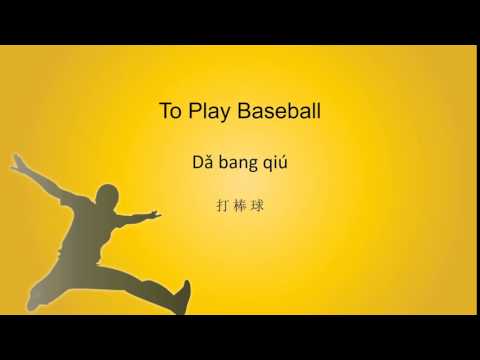
The word for how to say baseball in Chinese is 棒球 (bàng qiú), which literally means “stick ball” when you break it down. The first character 棒 (bàng) means stick or bat, and the second character 球 (qiú) means ball.
Table of Contents

This translation kind of sticks in your memory once you know what each part means. The logic behind the word really reflects how the sport works.
Key Takeaways
- The Chinese word for baseball is 棒球 (bàng qiú), meaning “stick ball”
- It breaks down into 棒 (bàng) for stick/bat and 球 (qiú) for ball
- Learning sports vocabulary gives you more confidence in Chinese conversations
The Chinese Word for Baseball
The standard Chinese word for baseball is 棒球 (bàng qiú). These two characters directly describe the sport.
The word splits into logical parts, so it’s not too hard to remember or make sense of.
Mandarin Characters and Pronunciation
The Chinese characters 棒球 represent baseball in both simplified and traditional writing. Pronounce it as bàng qiú, paying attention to the tones.
For 棒, use the fourth tone, a sharp drop. For 球, use the second tone, which rises.
Chinese speakers say this word pretty much the same way everywhere Mandarin is spoken. The tone pattern helps it stand out from similar words.
Each character has its own stroke order and structure. 棒 has 12 strokes, 球 has 11.
Word Meaning and Composition
棒球 literally means “stick ball” in English. Chinese often forms new words by combining familiar ideas.
棒 means “stick” or “bat,” as in the wooden bat you use in the game. 球 means “ball,” which is what gets hit and thrown.
This makes sense since baseball is all about hitting a ball with a bat. Chinese builds compound words like this all the time.
The characters together give you a clear picture of the sport. Even if you haven’t seen baseball, you can probably guess what it’s about from the name.
Alternative Ways to Say Baseball in Chinese

While 棒球 (bàng qiú) is the go-to word for baseball, you’ll find some alternatives in different regions or contexts. Dialects and specific situations can bring out other phrases.
Regional Variations and Dialects
Most Chinese-speaking regions use 棒球 (bàng qiú), including Taiwan. But some older folks might use more descriptive phrases.
For example, you might hear 打棒球 (dǎ bàng qiú), which means “to play baseball.” In Hong Kong and southern China, Cantonese speakers stick with the same characters, but pronounce it “paang kau.”
Some newspapers or media sources go for 棒球運動 (bàng qiú yùn dòng), meaning “baseball sport.”
Other Contextual Translations
In professional baseball, you’ll see terms like 職業棒球 (zhí yè bàng qiú) for pro leagues. Academic writing might use 棒球運動 or 棒球比賽 (bàng qiú bǐ sài) for baseball games.
Historical texts sometimes call it 美式棒球 (měi shì bàng qiú), or “American-style baseball.” If you’re talking about equipment, 棒球用具 (bàng qiú yòng jù) comes up, and for youth leagues, 少年棒球 (shào nián bàng qiú) is common.
International competitions? That’s 國際棒球 (guó jì bàng qiú).
Practical Tips for Learning the Word
Getting comfortable with 棒球 (bàng qiú) takes some focused practice. Using common sentences and memory tricks really helps you lock in the characters and sounds.
Common Usage in Sentences
You’ll hear 棒球 (bàng qiú) a lot in sports chats. Learning a few baseball phrases lets you practice the word in real conversations.
Try these sentence patterns:
- 我喜欢打棒球 (wǒ xǐ huān dǎ bàng qiú) – “I like to play baseball”
- 他是棒球迷 (tā shì bàng qiú mí) – “He is a baseball fan”
- 我们去看棒球比赛吧 (wǒ men qù kàn bàng qiú bǐ sài ba) – “Let’s go watch a baseball game”
Say these out loud every day if you can. It helps you remember how to pronounce bàng qiú and where it fits in a sentence.
Some practice ideas:
- Read sentences with 棒球 for a few minutes daily
- Write a few new sentences using the word each week
- Listen for baseball in Chinese sports TV broadcasts
Mnemonic Devices for Retention
Honestly, memory tricks make learning 棒球 way less painful. 棒 (bàng) is “stick” or “bat,” 球 (qiú) is “ball.”
Visual memory works wonders:
Picture a bat smacking a ball every time you see these two together. That image really sticks.
Breaking down the characters helps too:
- 棒 has the wood radical (木), hinting at the wooden bat
- 球 has the jade radical (王), which feels round and valuable
Write the characters a bunch of times while saying “bàng qiú” out loud. Combining seeing, writing, and hearing really helps.
Make some flashcards with the characters on one side and a baseball picture on the other. Or use a phone app that shows stroke order, it makes writing practice way easier.
Frequently Asked Questions
Lots of learners have questions about baseball words and how the sport fits into Chinese-speaking regions. Curious about vocabulary, dialects, or cultural stuff? You’re not alone.
More advanced ways for how to say baseball in Chinese sentences:
- Chinese: 放学后,操场只剩夕阳和挥棒声,我把棒球抛向空中,球划出的弧线像给天空写了个潦草的“加油”。
Pinyin: Fàngxué hòu, cāochǎng zhǐ shèng xīyáng hé huī bàng shēng, wǒ bǎ bàngqiú pāo xiàng kōngzhōng, qiú huá chū de húxiàn xiàng gěi tiānkōng xiěle gè liáocǎo de “jiāyóu”.
English: After school, only sunset and bat-swings remain; I toss the baseball sky-high, its arc a messy “hang in there” scrawled across the sky. - Chinese: 第一次参加棒球营,我用左手戴右手手套,结果接球时球直接砸在胸口,教练笑我“送了一颗本垒吻”。
Pinyin: Dì yī cì cānjiā bàngqiú yíng, wǒ yòng zuǒshǒu dài yòushǒu shǒutào, jiéguǒ jiē qiú shí qiú zhíjiē zá zài xiōngkǒu, jiàoliàn xiào wǒ “sòngle yì kē běnlěi wěn”.
English: At my first baseball camp I put a right-hand glove on my left; the ball smacked my chest, and the coach teased I’d “gifted myself a home-run kiss.” - Chinese: 爷爷把旧棒球剖开,里面的软木塞已经发黄,他却说那是时间给他签名的纪念品。
Pinyin: Yéye bǎ jiù bàngqiú pōukāi, lǐmiàn de ruǎnmùsāi yǐjīng fāhuáng, tā què shuō nà shì shíjiān gěi tā qiānmíng de jìniànpǐn.
English: Grandpa split an old baseball; the cork inside had yellowed, but he called it a keepsake autographed by time itself. - Chinese: 深夜的室内棒球馆,球击中手套的“啪”声被墙壁放大,像有人在黑夜里鼓掌。
Pinyin: Shēnyè de shìnèi bàngqiú guǎn, qiú jīzhòng shǒutào de “pā” shēng bèi qiángbì fàngdà, xiàng yǒurén zài hēiyè lǐ gǔzhǎng.
English: In the late-night indoor cage, the ball’s “pop” against leather echoes off walls like applause from the darkness. - Chinese: 我把棒球塞进书包侧袋,地铁里它悄悄滚动,像一颗急于出场的心,提醒我放学后还有九局的人生要打。
Pinyin: Wǒ bǎ bàngqiú sāi jìn shūbāo cè dài, dìtiě lǐ tā qiāoqiāo gǔndòng, xiàng yì kē jíyú chūchǎng de xīn, tíxǐng wǒ fàngxué hòu hái yǒu jiǔ jú de rénshēng yào dǎ.
English: I slipped the baseball into my backpack’s side pocket; it rolled quietly on the subway like an eager heart, reminding me there are still nine innings of life to play after school.











