Mandarin Chinese Vocabulary for Living your Daily Life in China
Latest from the Blog
Looking for fresh ways to boost your Chinese skills? Here are the five latest posts from Chinese For Living, covering everything from must-know vocabulary and daily conversation tips to cultural insights and practical phrases for life in China. Whether you’re just getting started or refining your fluency, these new posts are here to support your journey. Dive in and discover something new today!
Toilet paper in Chinese is 卫生纸 (wèi shēng zhǐ), pronounced roughly “way shung jr”. 卫生 means hygiene and 纸 means paper, so the word is literally “hygiene paper”. If you are traveling or moving to China, learn this word before you land, and tuck a pack of tissues into your bag: many public restrooms in […]
Charger in Chinese is 充电器 (chōng diàn qì), literally a “fill-with-electricity device.” To borrow one, say 我可以借一下充电器吗? (wǒ kě yǐ jiè yí xià chōng diàn qì ma?), “Can I borrow a charger?” And when your battery is dying, the sentence that opens every door is 我的手机没电了 (wǒ de shǒu jī méi diàn le), “My phone […]
Toothpaste in Chinese is 牙膏 (yá gāo), literally “tooth paste.” To buy it, say 我想买牙膏 (wǒ xiǎng mǎi yá gāo), “I want to buy toothpaste,” or simply ask 牙膏在哪儿? (yá gāo zài nǎr?), “Where is the toothpaste?” This guide gives you the word, the phrases for the toiletries aisle, and the label terms that keep […]
To bargain in Chinese, say 还价 (huán jià), literally “to return the price.” The phrase that does the work at any stall is 可以便宜一点吗? (kě yǐ pián yi yì diǎn ma?), “Can it be a little cheaper?” Add 太贵了 (tài guì le), “too expensive,” and the vendor knows the game has started. This guide gives […]
Shampoo in Chinese is 洗发水 (xǐ fà shuǐ), literally “wash-hair water.” At a supermarket, salon, or on Taobao, that one word is all you need: 我要买洗发水 (wǒ yào mǎi xǐ fà shuǐ), “I want to buy shampoo.” This guide gives you the word, the full hair care vocabulary around it, and the phrases for buying […]
Take your spoken Chinese to the next level with our favorite iTalki tutors!
Their list of qualified native speakers are patient with all learning levels, well-educated, and actually want to help you improve your Mandarin; start mastering these vocabulary words the easy way and see your Chinese skills soar~
Start Here: Beginner Essentials
New to learning Chinese? This is the perfect place to begin. These five beginner-friendly posts are designed to give you a solid foundation, covering useful phrases, pronunciation tips, and everyday vocabulary that you can start using right away. Whether you’re learning for travel, work, or daily life in China, these posts will help you take your first confident steps.
QR code in Chinese is 二维码 (èr wéi mǎ), literally a two-dimensional code, and the verb you need with it is 扫 (sǎo), to scan: 扫二维码, scan the QR code. In China this is not trivia. It is how you pay for noodles, order coffee, unlock a shared bike, and add a new contact, all […]
You are sitting in the salon chair, caped up, and the stylist is waiting. In English you would say “just a trim, shorter on the sides, keep the top.” In Chinese, nothing comes out. The word that unlocks the whole chair is 理发 (lǐ fà), and knowing how to say haircut in Chinese is the […]
The first time I walked into a Chinese bank, I stood at the counter for ten minutes while everyone ignored me. A guard finally pointed at a small machine by the door: I was supposed to take a number ticket first, and everyone else was sitting down because they had one. That day I learned […]
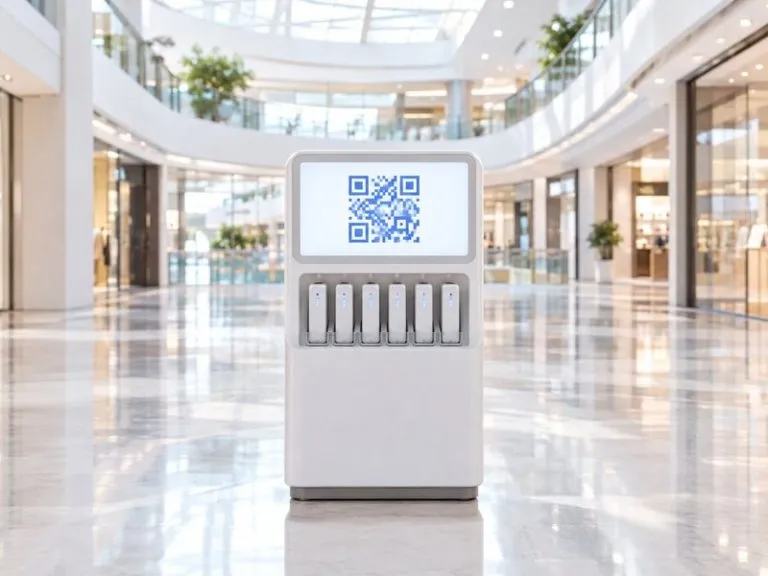
My phone died at 11 PM on a Shanghai street, and with it went my map, my translation app, my ride home, and my ability to pay for anything. A stranger pointed at a glowing white kiosk on the bar counter, I scanned a code, and a charged battery pack slid out like magic. That […]
Need to know how to say today in Chinese? The word is 今天 (jīn tiān), and you’ll use it roughly fifty times a day. From making plans to checking the weather to simply greeting someone, this is one of the most essential words in the entire language. After twelve years in Tianjin and an HSK5 […]
Take your HSK vocabulary to the next level with RecallGrid! Their new three-sided flashcards make learning Chinese faster, smarter, and more fun, with English + Pinyin + Chinese characters; start mastering words the easy way and see your Chinese skills soar~
Level Up: Intermediate Chinese
Ready to take your Chinese to the next level? These six intermediate posts are here to help you build on the basics and grow your confidence. Explore richer vocabulary, natural sentence structures, and real-life expressions that bridge the gap between classroom learning and everyday conversations. Perfect for learners who want to sound more fluent and feel more at home in Chinese.
Sick leave in Chinese is 病假 (bìng jià), and the act of asking for leave is 请假 (qǐng jià). If you wake up feverish in China, one sentence covers it: 我想请一天病假 (wǒ xiǎng qǐng yì tiān bìng jià), “I would like to take one day of sick leave.” This guide gives you the exact words […]
Overtime in Chinese is 加班 (jiā bān): 加 (jiā) means to add and 班 (bān) means a work shift, so the word is literally “add a shift.” The follow-up words you will need just as often: 加班费 (jiā bān fèi, overtime pay), 调休 (tiáo xiū, comp time), and 准时下班 (zhǔn shí xià bān, leaving work […]
The Taobao package finally arrives after a week of tracking, you open it, and the jacket is two sizes too small. Your money is sitting in the seller’s account, the interface is all in Chinese, and the clock on your return window is ticking. The word that gets your money back is 退款 (tuì kuǎn), […]
It was 3 AM in my first Shanghai summer when I learned the most urgent vocabulary of my life: a high-pitched whine circling my ear, lights on, me standing on the bed with a slipper. I did not know the word for my enemy. Now I do, and so will you: how to say mosquito […]
The check-in agent at Pudong Airport pointed at my backpack and said something fast. I caught 托运 (checked) and 随身 (with you), and realized the question was simply: is that bag flying with you or under the plane? That was my introduction to how to say carry-on luggage in Chinese: 随身行李 (suí shēn xíng lǐ), […]
The Airbnb listing said “fully equipped,” and the bathroom was, sink, toilet, even a heated floor. What it did not have was anything to dry myself with after the shower. So there I stood, dripping, typing into a translator: how do you even ask for this? The answer is how to say bath towel in […]
Take your spoken Chinese to the next level with our favorite iTalki tutors!
Their list of qualified native speakers are patient with all learning levels, well-educated, and actually want to help you improve your Mandarin; start mastering these vocabulary words the easy way and see your Chinese skills soar~
Go Deeper: Advanced Chinese
For learners aiming for fluency and cultural nuance, these six advanced posts are your next challenge. Dive into complex grammar, idiomatic expressions, and authentic language used by native speakers in real-world situations. Whether you’re refining your speech, reading local news, or navigating professional settings, these posts are designed to sharpen your skills and deepen your understanding of Chinese.
Need to know how to say locksmith in Chinese? The word is 锁匠 (suǒ jiàng), which literally means “lock craftsman.” You’ll need this word whenever you lose your keys, get locked out of your renting an apartment, or need to replace a broken lock in China. After twelve years in Tianjin, HSK5, Intercultural Studies background, […]
How to say vulnerable in Chinese? The most common word is 脆弱 (cuì ruò). Whether you are talking about emotional vulnerability, physical fragility, or cybersecurity risks, this word covers a wide range of meanings in Chinese. After twelve years in Tianjin, HSK5, Intercultural Studies background, I have heard 脆弱 used in hospitals, therapy conversations, tech […]
With twelve years in China, an HSK5 certification, and an Intercultural Studies background, I help people navigate real-life Chinese situations. Today, we are covering a word every car owner and driver in China needs: how to say car dealership in Chinese. Whether you are buying a new car in Beijing, getting your vehicle serviced in […]
Learning how to say turbulence in Chinese isn’t just about memorizing a word. The English term “turbulence” covers everything from bumpy airplane rides to political unrest and even wild fluid dynamics. Mandarin Chinese splits these meanings into different words. Using the wrong one can make your sentence sound strange or confusing. For “turbulence,” the most […]
If you want to talk about ocean animals in Chinese, you’ll need the right word for whale. This simple term lets you communicate clearly in class, while traveling, or just chatting with friends. In Mandarin, how to say whale in Chinese is 鲸鱼 (jīng yú). People often shorten it to just 鲸 (jīng) in casual […]
Planning a trip to China or chatting with Chinese-speaking friends about the outdoors? You’ll want to know the right words. Learning how to say camping in Chinese opens up conversations about nature, travel, and adventure with millions of Mandarin speakers. The most common way for how to say camping in Chinese is “露营” (lù yíng). […]